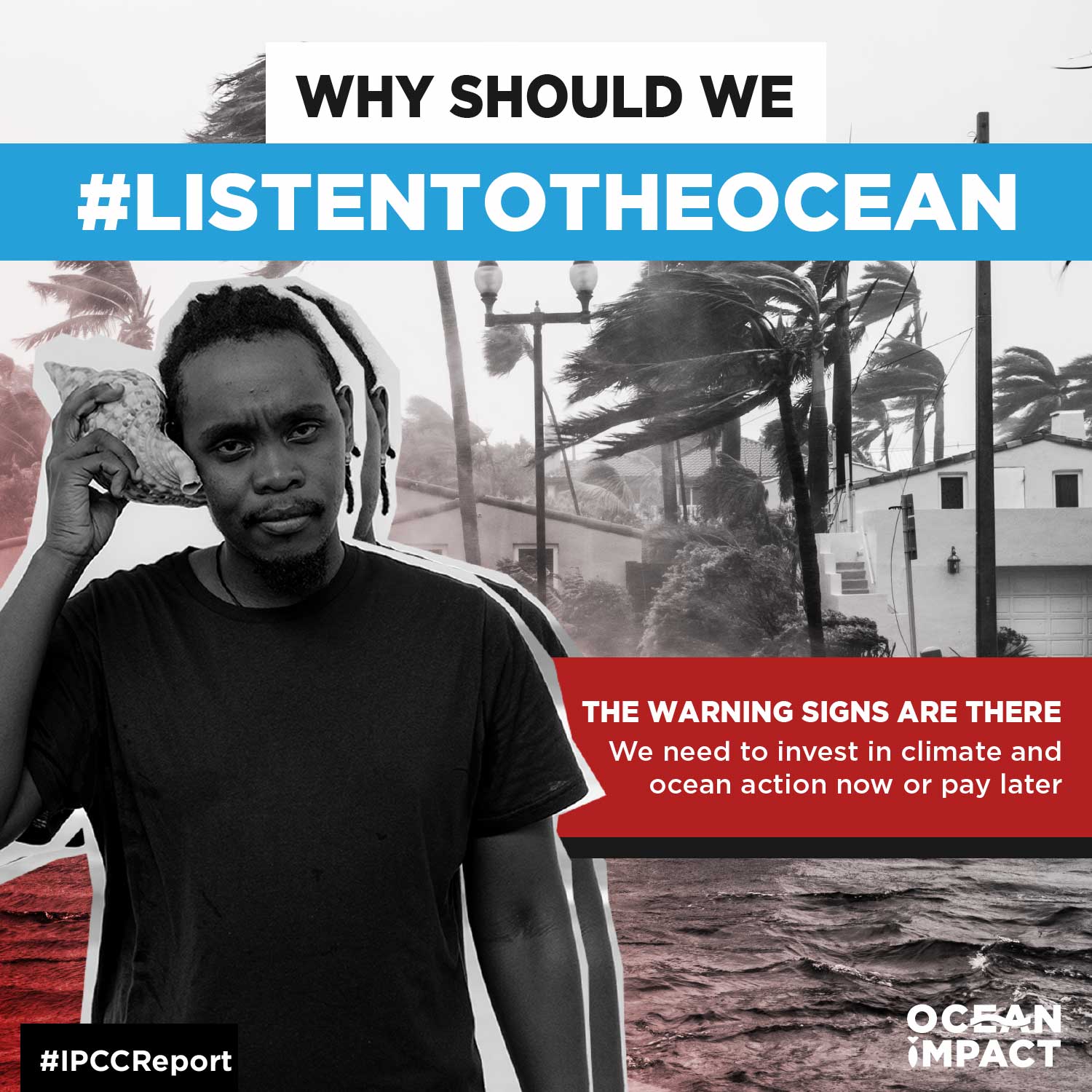
 The warning signs have been outlined by the Intergovernmental Panel on Climate Change (IPCC) report – in short, things do not look good.
Released ahead of the COP26 meeting in November the Intergovernmental Panel on Climate Change (IPCC) report predictions were made for each region based on the anticipated heating of the planet and our oceans – and in short, things do not look good.
Recent news of international oil giant Eni pulling out of plans to explore for oil with Sasol in a large block off South Africa’s southeast coast is welcomed – given the current climate emergency we find ourselves in and the findings highlighted in the IPCC report. Predictions outlined in the report have been made for Southern Africa (and Africa) by over 1400 scientists with high confidence.
The report outlines that Africa is warming at an alarming rate and that its’ Ocean (our Ocean) will warm quicker on average than the rest of the world. This means as a continent we will experience more severe weather events – both hot and cold, especially along our coastlines. Sea level rise for our continent is higher compared to the global rate and this is likely to continue resulting in coastal flooding and erosion.
Changes being observed in Southern Africa include a decrease in overall rainfall with a drier environment more prone to droughts, an increase in heavy rainfall and flooding and areas which have become drier with more frequent droughts. According to the IPCC report the east coast (Eastern Cape and KwaZulu - Natal) also has a higher likelihood of category 4-5 hurricanes occurring.
Marine heatwaves have become more frequent in Africa and are likely to increase around our continent. The warming of the ocean surrounding Africa is concerning, as it is directly related to extreme weather conditions such as tropical storms and African coastal communities have been and will continue to be affected by the climate crisis.
So, what can be done?
While Marine Protected Areas (MPAs) cannot stop climate change alone they can play a crucial role in providing resilience to marine ecosystems and combating the threats and impacts outlined in the IPCC report.
MPA networks are designed with climate change in mind, ensuring connectivity between individual MPAs to provide safe stepping zones for climate migrants. A key example is the Southwest Indian Seamounts MPA, which not only protects cold water corals enhancing their ability to withstand climate change but spans a range of depths and temperatures allowing species the space to move and adapt.
MPAs however also mitigate the impact of climate change in more indirect ways. By protecting reef predators, they ensure increased stability of coastal habitats, which buffer climate related instability. Two MPAs, the Aliwal Shoal and Protea Banks (in KwaZulu-Natal), are key habitats for protecting reef predators such as sharks and rays. (Roberts et al. 2017)
MPAs act as refuges, preserving healthy marine ecosystems that have populations that are genetically diverse meaning they are more likely to be able to adapt to a changing climate. They protect habitats that sequester carbon such as mangroves, seagrass beds and coral reefs, and can mitigate the impacts of climate change with coastal ecosystems such as mangroves protecting coastlines from storm surges. MPAs also protect areas that are carbon sinks. Coastally, that includes mangroves, seagrass beds and coral reefs but the importance of undisturbed sediment is often overlooked.
“Marine Protected Areas can help combat the rate of our oceans warming,” comments Lauren van Nijkerk, Campaign Director at WILDTRUST. “With this in mind and the urgency of us needing to protect a minimum of 30% of the global ocean by 2030 – only a few years away, we launched an appeal last year to increase the protected footprint of South Africa’s oceans from 5% to 10%. Please add your name and help us appeal to the South African government to increase marine protection in our waters and help us become better equipped to fight the impacts of climate change here: https://oceanimpact.co.za/sa10percentappeal/
News supplied.