 Working with ToPS (Threatened or Protected Species).
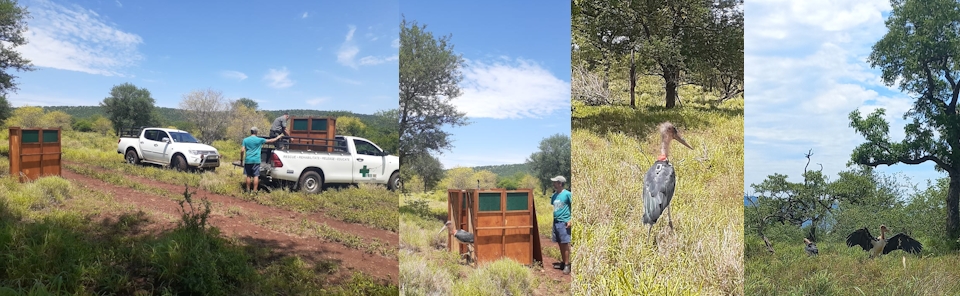
Then came the time, early morning 4am, to load these two Marabou Storks and drive them 5 hours to their release site on the Pongola Nature Reserve (Ezemvelo KZN Wildlife), in Zululand, KwaZulu Natal.
Why did we choose this site?
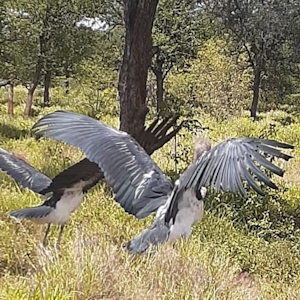
Well the only known breeding colony in South Africa consisting of about 12 birds, is on the Pongola Nature Reserve. There is also a breeding colony in Eswatini (nearby the same reserve). So in order for these two birds, bred in captivity at Crocworld Conservation Centre (and parent raised), to integrate with others of their own kind, we thought releasing them within 500m of the breeding colony would be the best option.
The release of two, captive bred, parent raised Marabou Storks, into the wild
And at 4am, when we went to load the two birds, they were clearly ready for the trip, only waiting for us to load them up.
Each bird was loaded into a beautiful transport crate, specifically designed for long legged, tall birds like these. Plenty of airflow and comfort, which was necessary for this trip.
A cool misty morning in Howick, and the team loaded and secured the birds for their 5 hour journey to the Pongola Nature Reserve in Zululand, where the temperatures would be a lot hotter than here.
Which is why we needed to leave early.
For those who don't know, this beautiful reserve, the Pongola Nature Reserve, is the second oldest declared nature reserve in the world... second only to Yellowstone National Park in America.
Rickert (Ezemvelo KZN Wildlife), was there to meet us and take us onto the reserve to the chosen release site. We carefully offloaded the transport crates with the birds inside.
This spot was approximately 500m from the breeding colony's nesting site.
And one at a time, step by step... this was their big moment in life... becoming a part of nature, their true purpose in life... far better than a life in captivity.
They stood looking about quite confidently. It was almost as if they knew they were home.
Marabou Storks are kind of lazy birds... they hang around doing pretty much nothing for around 16 hours a day. Mostly walking while foraging, seldom doing short distance flights, preferring high altitude and long distance flying when moving to new feeding areas.
They slowly disappeared behind the curtain of trees and grass, this was the last we saw. Trackers now working, we will track them via satellite for the next few years to see how they cope. And we are confident they will.
More about FreeMe Wildlife