Everybody won on the two day Forest Ecology Course held in Dargle recently. Eugene Moll, who lives in Cape Town now, got to spend time in the forests he remembers so fondly from his student days, to relax on the veranda of Crowned Eagle Cottage listening to tree dassies call at night and to stir up some controversy around the trees we thought we knew. All his favourite things!
Participants were enchanted by his enthusiasm and knowledge and couldn't believe their luck at having such an expert on hand for a few days. The gorgeous Cairn of Old Kilgobbin provided the perfect venue beside the mist belt forest, the days were sunny and there was hand-made lemon cordial on tap. Life doesn't get much better than this – especially when you are learning about something as special as our forests.
One thing we all learned was to QUESTION things. To think about what makes a peach a peach, for instance. If we understand the basic characteristics of familiar plants we find in our gardens, we will have a much easier time trying to identify new trees.
Everyone was keen to try our they plant id skills using the Keys in various Guide books. Just to confuse everyone Eugene included two samples of Kiggelaria Africana (Wild Peach) – one branch from a mature tree and a twig from a little sapling. They were COMPLETELY different and had everyone puzzled for ages.
Eugene was rather disparaging about many of often difficult to use and 'unfriendly' keys. The botanical jargon is hard to understand, descriptions of many characters are too general and photos are non-specific. "What is the point of a photo of the entire tree, when all you can see in the forest is the bark?" he asks. So we learn that the Guide books are exactly that, guides. Nothing beats in the field observation. Walking, looking, feeling, tasting and comparing. "The same trees can be completely different from one area to another" commented Eugene, in awe of the huge specimens of Dais cotonifolia we came across. "In the Cape these are tiny scrubby things," he told us.
Eugene has produced a book called What's that Tree? A starter's guide to the trees of southern Africa, which he believes does a good job of highlighting the diagnostic features of each species – for example if 'three veins from the base of the leaves' is an important feature, he includes a picture of exactly that. Richard Booth, from Karkloof commented "I really enjoyed Eugene's wisdom."
Most of the course we spent outdoors under the forest canopy. Each tree has a little space around it if viewed from the air, we learnt. The tree tops brush against one another and keep each tree separate.
We came across an old logging pit where a Yellowwood had been felled many years ago for use in local houses. This illustrated perfectly how we have now lost the ability to live locally, on local resources. We have become 'Biosphere people' using resources from all over the globe in our daily lives.
Kathy Milford won't forget the course in a hurry. "The most memorable thing for me was the crazy expert peering through his treasured old magnifying glass with a chipped frame, at a little leaf and his saying 'this must be a Diosypyros whyteana, look at those orange hairs on the edge of the leaf'. That was a special moment, and when I looked through the magnifying glass there were the most beautiful little orange hairs that became larger than life. I felt like Alice in Wonderland! He showed us the most amazing little details on the leaves and trees which would normally have escaped my attention! Wonderful"
Penelope Malinga agreed "I will pay a lot more attention to the small details in future." Penelope also loved seeing Samango monkeys for the first time. A troop was feasting on the fresh green Celtis leaves right above our heads as we explored the forest edge.
We learnt so many fascinating facts like: Insects are the biggest herbivores and that woody plants (C3) utilise higher levels of carbon dioxide. Eugene demonstrated how to make rope from the bark of Dais cotonifolia (Grewia occidentalis also used for the is purpose), and we learned the vines of Dalbergia obovata are used to make fishing baskets.
Oriah and Kei Ellis, who are home schooled in Dargle, used the opportunity for some outdoor learning. "The tree ecology course was a great experience - learning about the different shapes of leaves, learning through the interactions with others, and how to simply identify trees. I also enjoyed taking a walk through Barend's forest, eating cookies and making new friends! " said Oriah afterwards.
Barend Booysen, who is custodian of the section of forest we spent time in, had a marvellous time. "I really thought I knew this forest backwards. I have been humbled by all the things I have never noticed before and my head is spinning with all the new information. I learnt so much. What a delightful man." David Crowe added "The two day workshop was informative and worthwhile."
Eugene Moll is a retired professor from the Department of Biodiversity and Conservation Biology at the University of the Western Cape. He holds a PhD in plant ecology from the University of KwaZulu-Natal. He edited the first edition of the Keith Coates Palgrave's Trees of Southern Africa, and has authored and co-authored many guides and papers on trees and the ecology of woody plants.
Article and pictures kindly supplied by Nikki Brighton
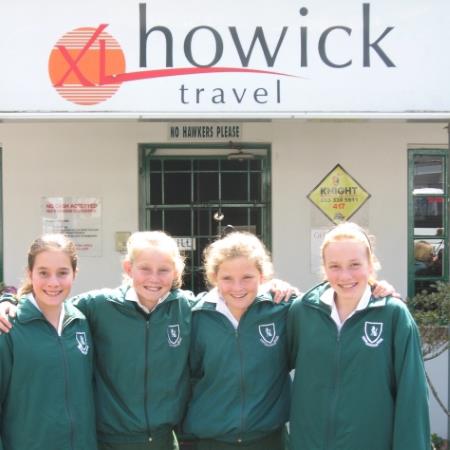 Howick Preparatory Grade 5 classes have recently returned from their three day Durban Trip. In preparation for the excursion they went through the motions of planning and preparing for an overseas holiday which included them having to apply for travel documents, have their photographs taken and book their own seats on the buses. They were then issued with 'passports' an itinerary, meal vouchers, bus tickets and entry passes to all the places visited in Durban.
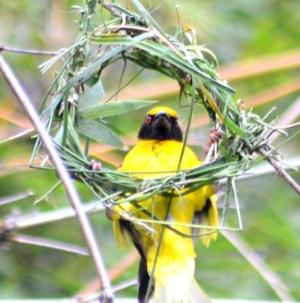 Benvie farm, located in the Karkloof, was established in 1882 by Scottish emigrant John Geekie and is well known throughout South Africa by both the gardening and bird-watching fraternities. Geekie, who was a cabinet maker by profession, also loved trees, and imported seedlings from across the world. Many of the trees which he planted are still standing today, including three giant eucalypts.
 Spring Greens, Spring Onions, Spring flavours, red cabbage, fresh herbs and purple peas, oranges and lemons, lettuce, green cabbage, beetroot, spinach and swiss chard, free range chickens and eggs (duck eggs too), yoghurt, cottage cheese, feta, cream, ice cream, real bread, hand-made soap.
 Howick, Helsinki and Honolulu will join the rest of the planet this
  BLKZN Midlands arranges one evening event each year which consists of a presentation on a topic other than birds. Last year we had Dr George Hughes with his presentation on work with turtles, and this year we have Steve Woodall who is an expert on butterflies, and a very interesting and entertaining speaker. The talk will be followed by a two-course dinner. See the
  Llewellyn and Wendy Robertson celebrate their 50th wedding anniversary on Friday 12th September. They are generation three to do so!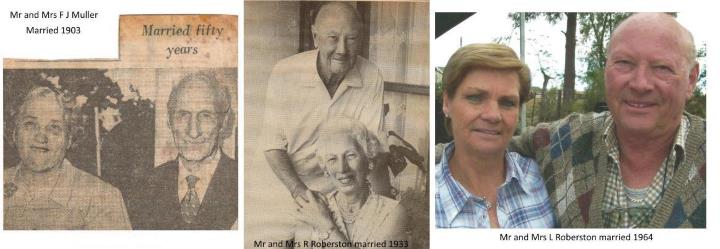
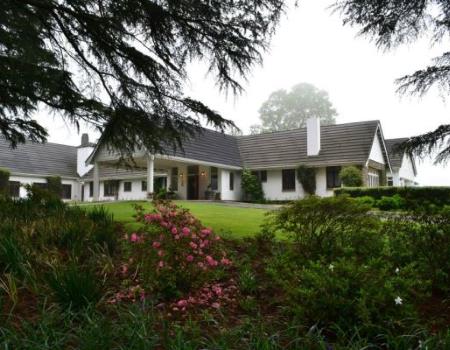 Sometimes you just need a break. A break from the hustle and bustle of everyday life. Time to clear your head and gain a fresh perspective.
 Vegetation Changes of the Upper uMngeni Catchment
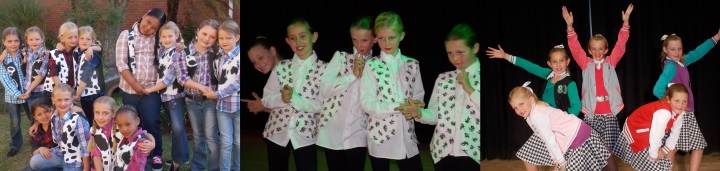
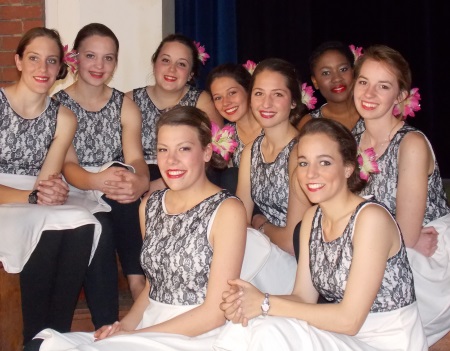 On Friday evening, 29 August, the High School hall was a hive of entertainment with great music & dancing at our 'Spring Fling'.
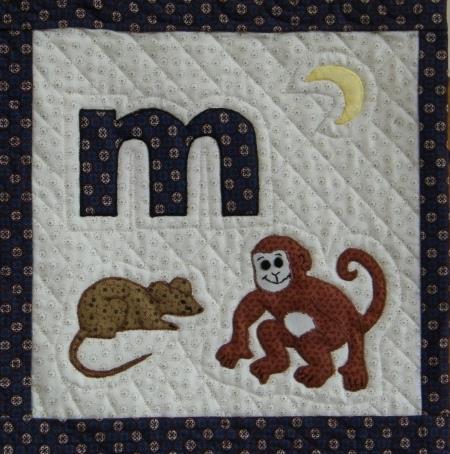 This beautiful Alphabet Quilt (Double Bed Size) has been made by members of Meander Quilters' Guild in Howick to raise funds for pre-primary school called God's Little Lambs. The school urgently needs funds to provide more facilities for pre-schoolers from local squatter camp. Please make us a generous offer and this quilt could be yours!


 Is your business so dependent on you that you can't get away from it? Ever wish you had an "Easy" button?
 In Grade 6
  Heritage Day is coming up on Wednesday 24th September 2014, and an
 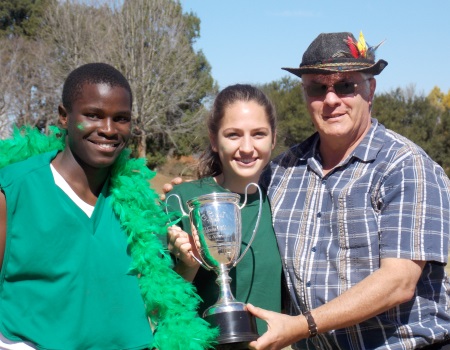 On Saturday, 23 August,
  Howick Prep